ResMed AirMini AutoSet: The Smallest Travel CPAP Device Reviewed (2026)
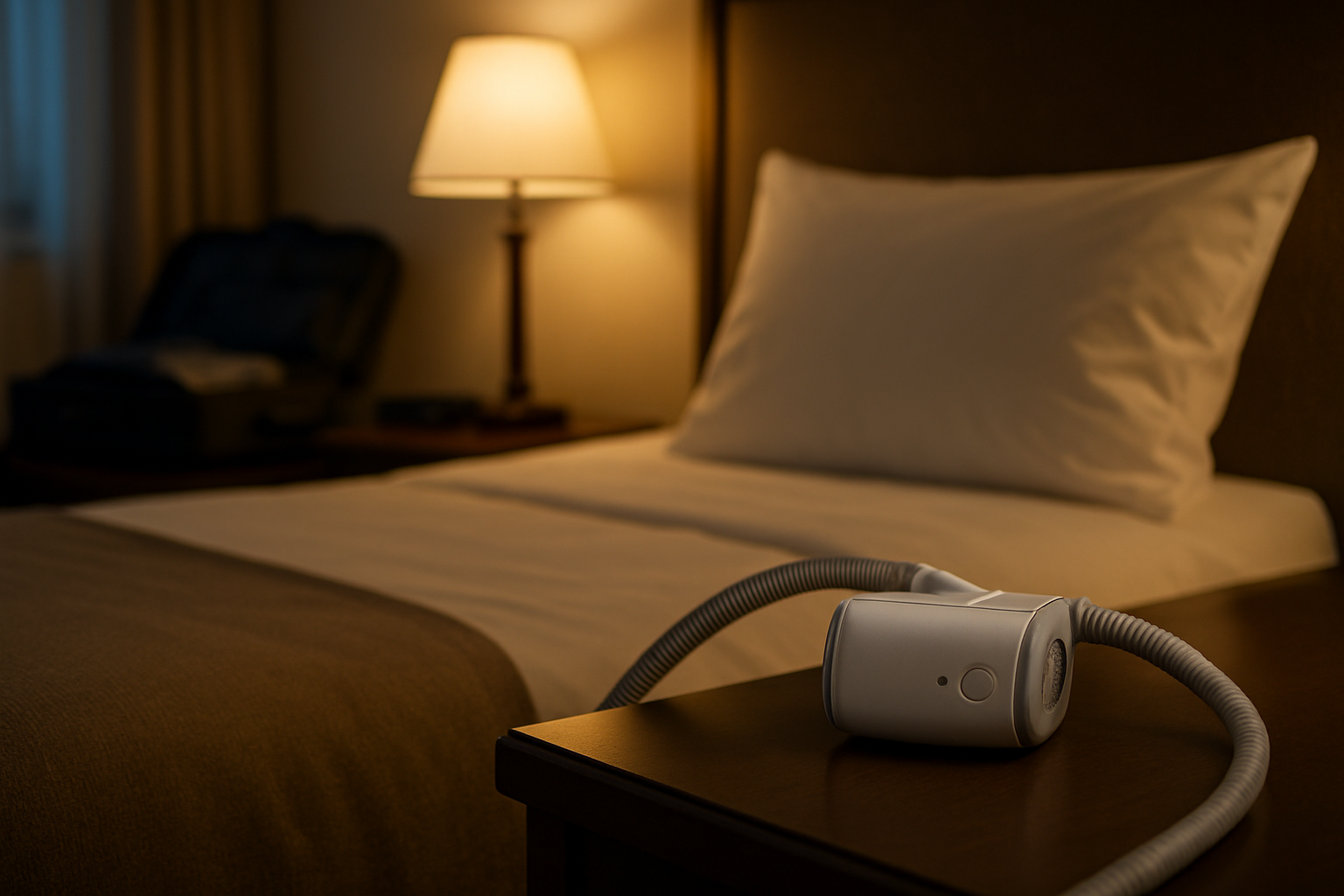
If you travel frequently and still don’t want to miss out on reliable sleep apnea therapy, you’ll eventually come across the ResMed AirMini AutoSet Travel CPAP Device. It is considered the smallest full-featured CPAP device in the world and is specifically designed for people who want to seamlessly continue their treatment on business trips, vacations, or while camping. In this comprehensive guide, we explain what the device can do, why its individual functions are important for your sleep, how to set it up and maintain it in everyday life, and where its honest limitations lie.
What is the ResMed AirMini AutoSet and how does it work?
The AirMini AutoSet is a so-called Auto-CPAP or APAP device (Automatic Positive Airway Pressure). Unlike a fixed-pressure device, it continuously measures your breathing and adjusts the therapy pressure breath by breath to meet actual needs. If the algorithm detects a beginning narrowing of the upper airways, an apnea, or snoring, it gently increases the pressure; when breathing relaxes again, it lowers it. This way, you receive only as much pressure as necessary throughout the night.
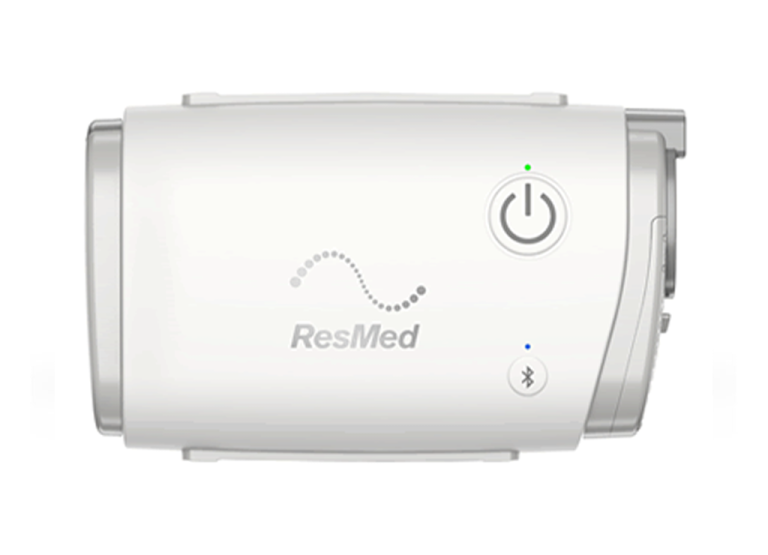
The trick: ResMed has packed the proven AutoSet algorithm of larger home devices into a case that, at about 13.6 cm in length and weighing around 300 grams, fits into almost any jacket or handbag. Despite its size, the device covers the full therapy pressure range of 4 to 20 cmH?O—the same range offered by stationary CPAP devices. It is therefore not a “stripped-down” emergency device but a serious full-time alternative for frequent travelers.
The most important features—and why they matter
The AirMini offers three therapy modes that cover different needs. In AutoSet mode, the device automatically regulates the pressure—ideal if your needs change throughout the night or depending on your sleep position. The CPAP mode delivers a constant, medically prescribed pressure. The AutoSet for Her mode finally takes into account that breathing patterns in women often differ: It responds more sensitively to flow limitations and increases the pressure particularly gently.
A central feature is the waterless humidification via HumidX and HumidX Plus. Conventional devices require a water tank with distilled water—cumbersome and heavy when traveling. The HumidX insert instead works on the principle of a heat and moisture exchanger (HME): It captures the moisture from your exhaled air and releases it again upon inhalation. This keeps your nose and throat comfortably moist without having to search for distilled water on the go. The HumidX Plus variant is intended for particularly dry environments such as airplanes or air-conditioned hotel rooms.
Two other features contribute to comfort. AutoRamp starts therapy at a low pressure and only increases it once the device detects that you’ve fallen asleep—making it noticeably easier to fall asleep. The expiratory pressure relief (EPR) reduces the pressure during exhalation by up to 3 levels, making exhaling against the airflow feel less strenuous.
Instead of a display, ResMed fully relies on the AirMini app, which connects to the device via Bluetooth. Every morning, you can see your sleep score, usage duration, mask fit, and the number of detected breathing interruptions. Your doctor or sleep lab can also adjust settings remotely if needed. With an operating noise of under 30 dBA, the device works so quietly that it usually doesn’t disturb your partner.
Setup and Daily Use
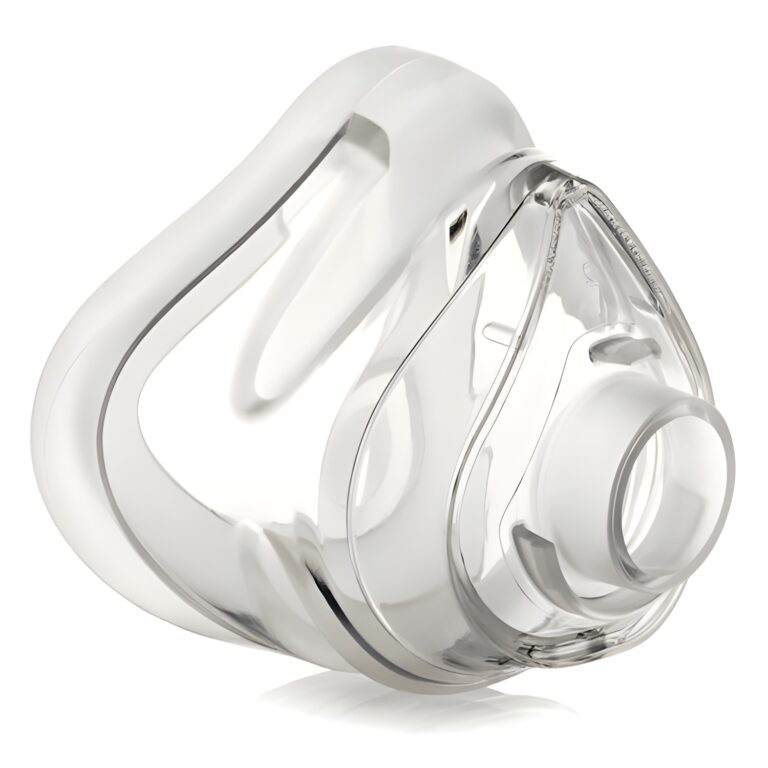
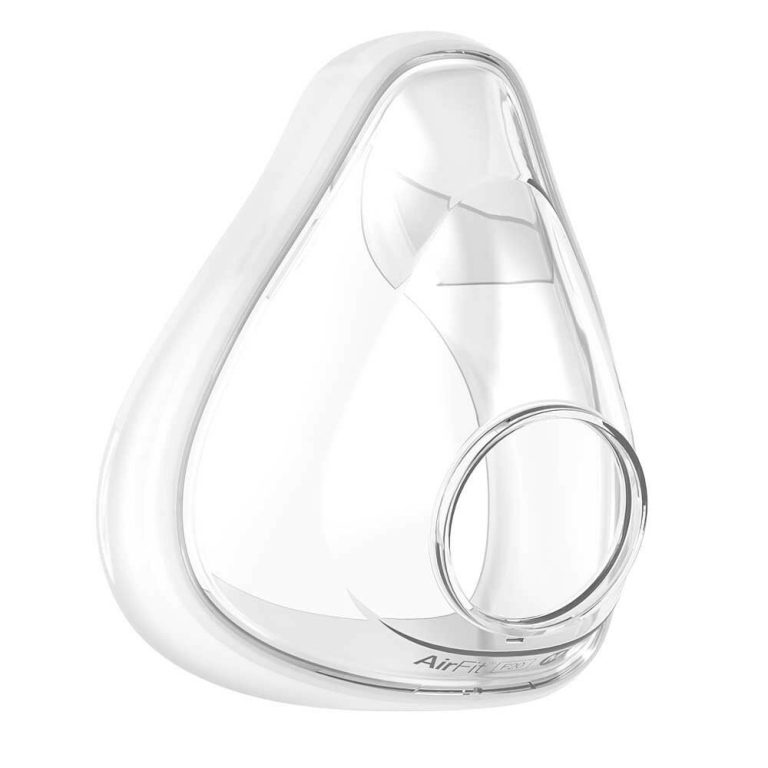
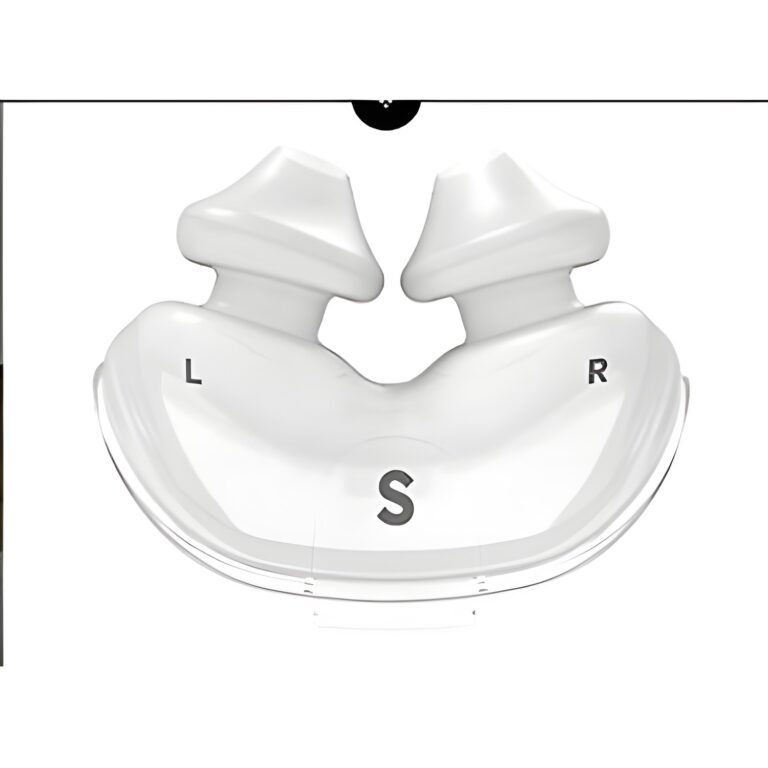
The setup is intentionally kept simple. You connect the power supply, pair the AirMini with your smartphone via the app, and select the appropriate mask type. Important to know: The AirMini uses a special tubing system that varies depending on the mask. For nasal masks like the AirFit N20 and full face masks like the AirFit F20, the HumidX insert sits in a small connector piece; for the nasal pillow mask AirFit P10 for AirMini, the humidification is directly integrated.
In daily use, it’s enough to place the device on a stable nightstand, put on the mask, and start the therapy using the button on the device or the app. Thanks to AutoRamp, you don’t need to adjust anything further. For transport, it’s recommended to use the suitable bag, where the device, tubing, and power supply are safely stored. Since the AirMini is FAA-approved, you can carry it as hand luggage on a plane and use it during the flight—having a certificate or doctor’s note can ease airport security checks.
Cleaning and Maintenance
Proper maintenance extends the lifespan and protects your health. Wipe the casing regularly with a slightly damp cloth and keep the air outlet free from dust. The HumidX inserts are consumable parts: ResMed recommends replacing them approximately every 30 days, as moisture and particles accumulate in them. You should not wash the insert, as this would destroy the porous paper material.
Clean the mask and tubing according to the manufacturer’s instructions—mask cushions daily with a mild cleaner, the headgear as needed. The air filter on the device should be regularly checked and replaced. Since the AirMini operates without a water tank, the tedious daily emptying and drying of a water chamber is eliminated—a real plus for travel. Suitable spare parts and accessories can be found in our CPAP Accessories category.
Common Problems and Their Solutions
Dry nose or mouth: Check if the HumidX insert is correctly seated, and switch to HumidX Plus in very dry rooms. For persistent dry mouth, a chin strap or switching to a full face mask may help. Noticeable ventilation noise: Travel devices let exhaled air escape directly at the mask connection, so a soft “whooshing” sound when inhaling is normal. A properly seated tube and a well-sealed mask reduce the noise. Connection issues in the app: Activate Bluetooth, keep the smartphone near the device, and update the app. Mask leaks: Use the “Mask Fit Check” function in the app to optimally adjust the mask before falling asleep.
Strengths and Limitations—An Honest Assessment
The greatest strengths of the AirMini are its compactness, the waterless humidification, and the fact that despite its miniature size, it operates with the same AutoSet algorithm as the larger ResMed devices. Frequent travelers gain noticeable freedom of movement. The quiet operation and the user-friendly app are also praised by many users.
However, there are clear limitations. The AirMini is only compatible with three ResMed masks (AirFit N20, AirFit F20, and AirFit P10 in the AirMini version). If you want to continue using your usual mask from another brand, you cannot do so with this device. Additionally, it does not offer a BiPAP mode—therefore, it is not suitable for people with a medically prescribed bilevel therapy. The absence of a display requires a willingness to work with a smartphone app. Finally, a travel device is generally considered a secondary or supplementary device and is not always covered by insurance. For daily home use, a full-featured device with a heated humidifier is usually the more comfortable choice.
Comparison: AirMini AutoSet Versus Home and Other Travel Devices
To facilitate the assessment, the following table compares the AirMini with the popular home device ResMed AirSense 10 AutoSet and the competing travel device HDM Z2 Auto. Both of the latter can also be found in our Sleep Apnea CPAP Devices category.
| Feature | ResMed AirMini AutoSet | ResMed AirSense 10 AutoSet | HDM Z2 Auto |
|---|---|---|---|
| Type | Travel CPAP/APAP | Home CPAP/APAP | Travel CPAP/APAP |
| Weight | approx. 300 g | approx. 1.25 kg (with humidifier) | approx. 300 g |
| Pressure Range | 4?20 cmH?O | 4?20 cmH?O | 4?20 cmH?O |
| Humidification | Waterless (HumidX/HME) | Heated water tank | Optional, waterless |
| Display | No (app only) | Yes, color display | No (app only) |
| Mask Compatibility | Only 3 ResMed masks | Almost all masks | Almost all masks |
| FAA Approval | Yes | Yes | Yes |
In short: The AirMini scores with waterless humidification and the ResMed ecosystem, while the Z2 Auto impresses with universal mask compatibility, and the AirSense 10 remains the most comfortable solution for home use.
Frequently Asked Questions (FAQ)
Is the ResMed AirMini suitable for daily use?
Yes. It provides full therapy with the same AutoSet algorithm as the larger ResMed devices. Many users use it permanently. However, for home use, some prefer a device with a heated humidifier and display.
Which masks can I use with the AirMini?
Compatible masks are the AirFit N20 (nasal mask), the AirFit F20 (full face mask), and the AirFit P10 for AirMini (nasal pillows mask). You can find suitable models in our CPAP Masks category.
Do I need distilled water?
No. Thanks to the waterless HumidX humidification, the water tank is completely eliminated—a great advantage when traveling.
Can I use the device on an airplane?
Yes, the AirMini is FAA-approved and can be carried in hand luggage and used during the flight. Ideally, carry a medical certificate with you.
Do I necessarily need a smartphone?
For daily operation, you can start the therapy directly on the device. However, the AirMini app is required for viewing your data and making setting changes.
Conclusion
The ResMed AirMini AutoSet is the ideal solution for those who want to seamlessly continue effective sleep apnea therapy while traveling. It combines full therapy performance, waterless humidification, and quiet operation in an exceptionally small housing. The limited mask compatibility and lack of display are the main compromises for this portability. For those who travel frequently and are at home in the ResMed ecosystem, the AirMini is a very good choice. For more information and to order, visit the product page: ResMed AirMini AutoSet Travel CPAP Device.
Matching products from our shop
Genuine products, fast tracked shipping.
Popular brands: ResMed · Philips Respironics