CPAP vs. VPAP vs. BiPAP vs. Adaptive Servo-Ventilation
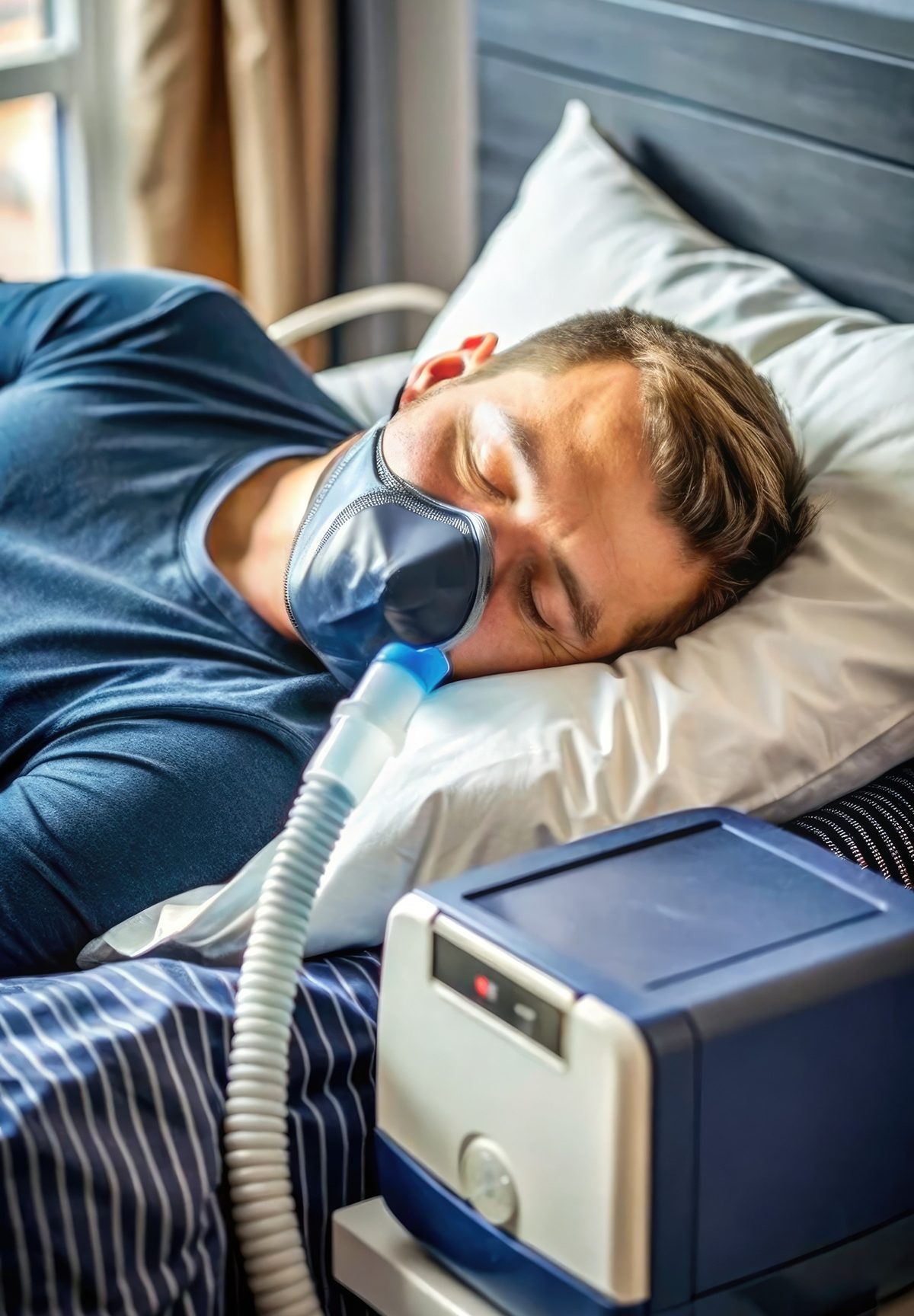
A large number of children and adults with moderate to severe sleep apnea undergo treatment with continuous positive airway pressure (CPAP). If sleep apnea is suspected, the doctor will likely prescribe a sleep study to confirm the diagnosis. Based on the results, various devices may be prescribed (distinguishing between CPAP, BiPAP, APAP, and VPAP). In this article, we take a closer look at these treatments. Specifically, we examine their features, similarities, differences, as well as advantages and disadvantages.
CPAP vs. BiPAP
CPAP: continuous positive airway pressure
BiPAP: bilevel positive airway pressure
A CPAP device is designed to deliver air at a preset pressure into the sleeper’s throat. This increases the air pressure during sleep.
This prevents the airways from collapsing. A consistent pressure is used throughout. Initially, some patients find this treatment uncomfortable due to the pressurized air on their eyes and mouth.
This can make it difficult for them to fall asleep. However, this issue can be avoided with properly fitting face masks.
A bilevel positive airway pressure (BiPAP) device, on the other hand, generates two different pressures: one for inhalation (IPAP) and another for exhalation (EPAP). The former is usually higher than the latter.
This mimics the natural breathing pattern, allowing for easier, more natural breathing. This form of treatment is reserved for patients with severe obstructive sleep apnea and/or heart or respiratory diseases and/or central sleep apnea.
As with CPAP, the patient participates in a sleep study in a sleep lab, during which the best pressure settings for them are determined.
It is important to regularly check and adjust the pressure settings as needed.
Similarities
- Both CPAP and BiPAP are among the most commonly prescribed treatments for sleep apnea.
- Both can be equipped with a humidifier and heater if needed (usually when issues with a blocked nose occur).
- Both are non-invasive treatment forms for sleep apnea.
Differences
- A CPAP device operates with a single pressure setting, while a BiPAP device generates two different pressures: one for inhalation (IPAP) and one for exhalation (EPAP).
- A BiPAP device is more expensive than a CPAP device.
- The pressure settings of a CPAP device do not need to be as precisely controlled as those of a BiPAP device.
- Those who have difficulty with a CPAP device can switch to a BiPAP device.
- A BiPAP device is more effective for patients with heart conditions as it reduces the effort of breathing.
- A BiPAP device is often more effective for patients with COPD (chronic obstructive pulmonary disease) because the different pressures for inhalation and exhalation help expel accumulated carbon dioxide.
APAP and VPAP
APAP: automatically adjusting positive airway pressure
VPAP: variable positive airway pressure
The VPAP therapy is designed for the treatment of central sleep apnea. Breathing is regulated from breath to breath. This form of treatment reduces what is known as Cheyne-Stokes respiration (periodic waxing and waning of breathing depth and the interval between breaths, interrupted by pauses in breathing). This, in turn, leads to a longer duration in the REM sleep phase.
It has been shown that APAP devices can prevent hypopneas and apneas before they even occur. The device automatically adjusts the pressure settings to changes in sleep position and even to the respective sleep phase.
Devices that operate with APAP and BiPAP are high-end and costly ventilation systems. However, they are particularly effective in treating sleep apnea.
Conclusion
The choice of treatment depends on the interplay of various factors. These include, among others, the severity or type of sleep apnea, costs, and comorbidities (such as heart or lung conditions). Your doctor can advise you on selecting the device best suited for your case.
Wishing you a restful sleep!
Further reading: CPAP vs. VPAP
Detailed Information on CPAP, VPAP, and BiPAP
What is CPAP?
CPAP, short for Continuous Positive Airway Pressure, is a treatment method for patients with sleep apnea. CPAP devices use a gentle air pressure to keep the airways open and are typically used by patients who have breathing problems during sleep. More specifically, CPAP therapy helps ensure that your airways do not collapse during sleep.
Why use CPAP?
Although using CPAP therapy requires some adjustment time, it can be very rewarding in the end. CPAP therapy can:
- Keep your airways open during sleep;
- Reduce or eliminate your snoring;
- Improve your sleep quality;
- Reduce or eliminate daytime sleepiness, a symptom of sleep apnea;
- Prevent or significantly lower high blood pressure.
What is VPAP?
Understanding the differences between the various forms of PAP therapy can be confusing. CPAP? APAP? BiPAP? Auto-BiPAP? Two-stage? VPAP? With so many terms and abbreviations, figuring out which treatment is best for you and your sleep apnea can be a challenging task.
We’re here to help! In this section, we cover everything about VPAP. What does VPAP stand for? How do VPAP devices work? How do VPAP devices differ from APAP and CPAP devices?
What does VPAP stand for?
The term VPAP, coined by ResMed, stands for Variable Positive Airway Pressure. VPAP is ResMed’s brand-specific name for bi-level or BiPAP therapy. The term is interchangeable with Bilevel-PAP or BiPAP. Whenever you hear or read VPAP, think BiPAP!
How does VPAP therapy work?
The name VPAP (Variable Positive Airway Pressure) describes how VPAP devices operate. They deliver air at two pressure levels: IPAP and EPAP. IPAP stands for Inspiratory Positive Airway Pressure, and EPAP stands for Expiratory Positive Airway Pressure.
Doctors prescribe specific IPAP and EPAP values based on the severity of your sleep apnea. When you inhale, the air pressure rises to your prescribed IPAP value. When you exhale, the air pressure drops to your prescribed EPAP value.
Is VPAP therapy right for you?
Have you found that CPAP and APAP devices do not effectively treat your symptoms? Do you feel tired and groggy even though you use your CPAP or APAP device every night? If this applies to you, a VPAP or BiPAP device might be the right solution for your sleep apnea.
Like CPAP and APAP devices, VPAP and other bilevel devices treat obstructive sleep apnea (OSA). Additionally, VPAP/BiPAP devices are also an effective treatment for central sleep apnea (CSA) and chronic obstructive pulmonary disease (COPD).
In conjunction with additional therapies, VPAP/BiPAP devices can also be used for neuromuscular disorders, pneumonia, obesity hypoventilation syndrome, and chest wall deformities.
What is BiPAP or Bilevel Therapy?
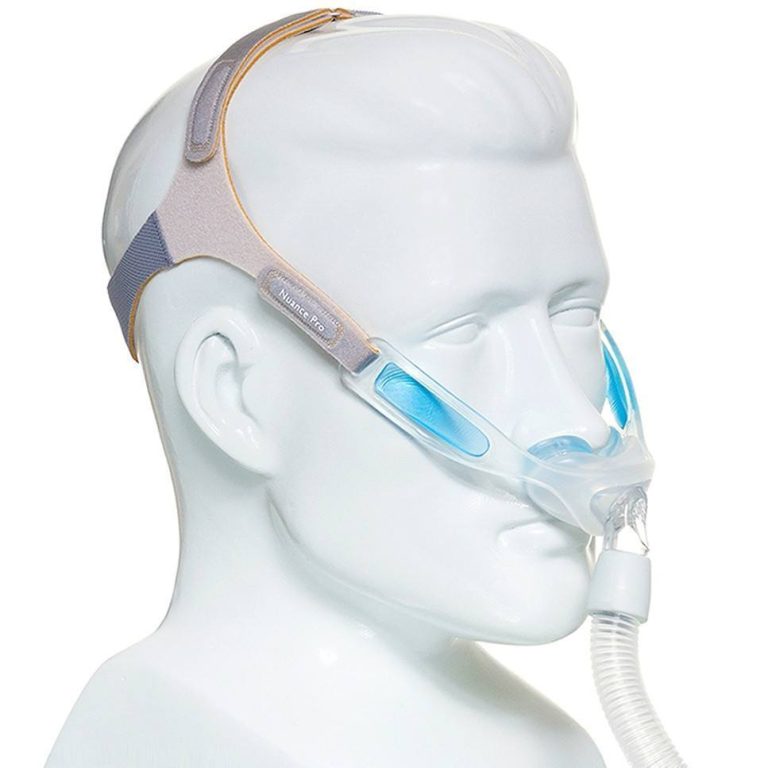
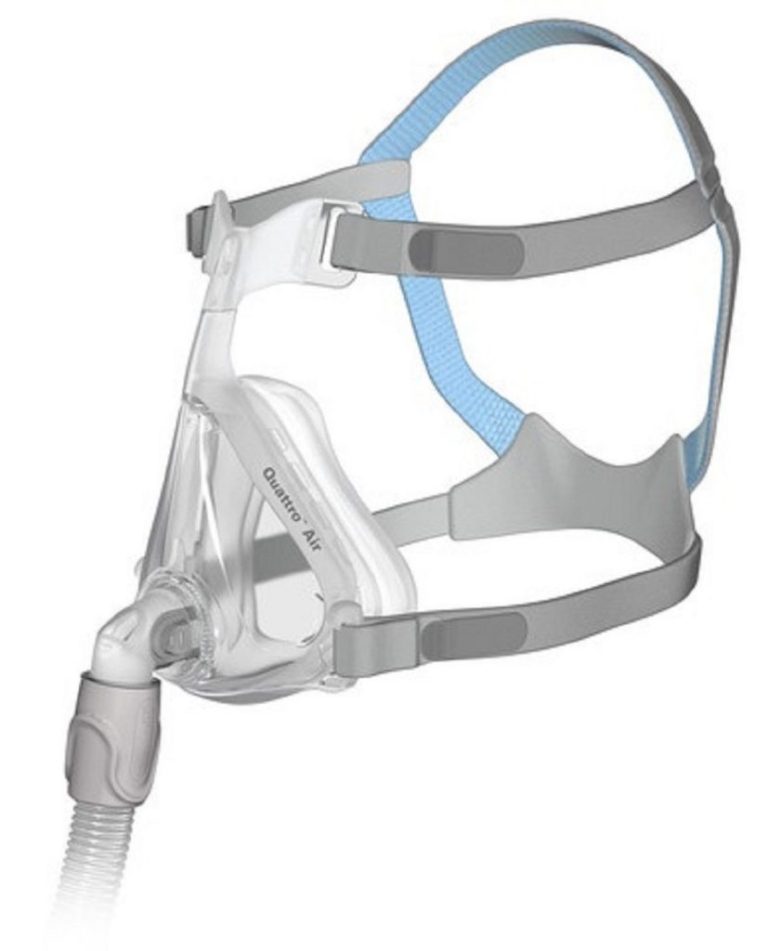
Many components of a BiPAP device correspond to those of a conventional CPAP device. For example, a face mask and a hose connected to the device are still required.
The key distinguishing feature of BiPAP is that the pressurized air is delivered at two alternating pressure levels.
When BiPAP therapy is used
BiPAP is a method of respiratory support often used to treat central sleep apnea—a condition that can occur with opioid use, heart failure, and after a stroke.
It can also be used for severe obstructive sleep apnea, especially when mixed apnea events suggest a central component.
It can be used in patients who cannot tolerate continuous positive airway pressure (CPAP), particularly those who report difficulty exhaling against the pressure. This is more likely to occur at higher pressures when these are needed to keep the airways open.
Although this threshold varies, BiPAP is often needed at pressures greater than 15 cm of water. It can help improve adherence in those struggling with CPAP therapy.
Furthermore, it is a non-invasive tool that can be used in hospital patients experiencing shortness of breath but who do not wish to be connected to a ventilator. It can be helpful for patients with neuromuscular weakness, such as that which may occur with amyotrophic lateral sclerosis (ALS).
Adaptive Servo-Ventilation
Adaptive Servo-Ventilation (ASV) is a device for treating sleep apnea. It is a newer, non-invasive option that helps you breathe evenly at night.
CPAP, BiPAP, VPAP: What is the difference?
BiPAP stands for Bi-Level Positive Airway Pressure, VPAP for Variable Positive Airway Pressure. Although the basic operation is more or less the same as a CPAP device, BiPAP and VPAP devices are more advanced due to their ability to monitor the patient’s breathing.
When treating your sleep apnea, the right device can make a crucial difference. However, before deciding whether a Z2 Auto Travel CPAP or a Philips Respironics DreamStation is the best choice for you, you should first know which type of device is best suited to treat your condition.
Devices for treating sleep apnea are often labeled as CPAP, BiPAP, VPAP, or APAP. Even though this may seem confusing at first glance, understanding how these devices differ in treating sleep apnea is important for high-quality treatment.
With the help of your doctor, you can find the device that best improves your sleep. Below, we take a closer look at what these terms mean and how they impact your sleep apnea treatment.
Matching products from our shop
Genuine products, fast tracked shipping.


Popular brands: ResMed · Philips Respironics