What can I do about my sleep apnea?
I’m watching TV right now. Most of the shows are about politics, sports, and other “interesting” programs. Who’s still interested in “interesting” shows? A segment where a woman wants to divorce her newlywed husband catches my attention.
The reason for the divorce? He snores too loudly! Through tears, she confesses her love for her husband but says she can no longer live with him (is she kidding?!). Both are avid fans of basketball and American football.
Their favorite stars? JaMarcus Russel, the sensational quarterback, and the mighty Shaquille O’Neal. This prompts me to do a quick Google search on how many Americans snore. The result: an incredible 45%. Even the couple’s favorite stars are affected!
Now that I have your attention, let’s talk about sleep apnea.
What plagues this husband (if he still is one) is medically called sleep apnea. It is a condition where sleepers experience breathing pauses that can last from seconds to minutes. These longer breathing pauses are called apneas. An unusually shallow breathing during sleep can also be considered sleep apnea, with these periods of shallow breathing referred to as hypopneas.
The brain usually detects the unusually high carbon dioxide concentration and/or the unusually low oxygen concentration and/or the unusually low pH level in the blood. This triggers an impulse that wakes the person from sleep.
Then they fall asleep again, either immediately or a short while later, and the cycle repeats. As a result, the person is tired the next day and has difficulty concentrating or staying awake throughout the day.
What’s the connection to snoring?
The typical snoring sound occurs when air is forced through partially open airways. It is commonly associated with obstructive sleep apnea (OSA). Other forms include central sleep apnea (CSA) and mixed/complex sleep apnea.
Obstructive sleep apnea is the most common form of this condition. It is caused by a physical obstruction of the airways. This form is particularly common in people who are overweight, have enlarged tonsils, large necks, and tongues. Central sleep apnea results from a lack of respiratory effort. It is the least common form. Mixed/complex sleep apnea is a combination of CSA and OSA.
Diagnosis: Sleep Apnea
A diagnosis of sleep apnea can be made based on a thorough medical history. Patients suspected of having sleep apnea often complain of daytime sleepiness, fatigue, irritability, and impaired coordination and memory. Your doctor may recommend a polysomnography. This test observes sleep habits and even measures the frequency and intensity of breathing pauses to determine the severity of sleep apnea.
Am I at risk for sleep apnea?
The risk of sleep apnea is greater for some people than others. The typical victim of this condition is male, older, overweight, and has a large neck. Other factors associated with an increased risk include: enlarged tonsils, large tongues (which can be particularly common in people with Down syndrome), micrognathia (small jawbone), alcohol and tobacco use, sedative use, reflux esophagitis, and family history of sleep apnea, though other factors may also be involved.
Treatment Options
There are several approaches to treating those affected. In mild cases of sleep apnea, a small change in nighttime sleep habits may help. The doctor may advise sleeping on your side (existing sleep apnea could be worsened by sleeping on your back). Avoiding alcohol, sleeping pills, and other sedatives is recommended for all patients. These are known to reduce throat muscle tension, leading to impaired airflow in the airways.
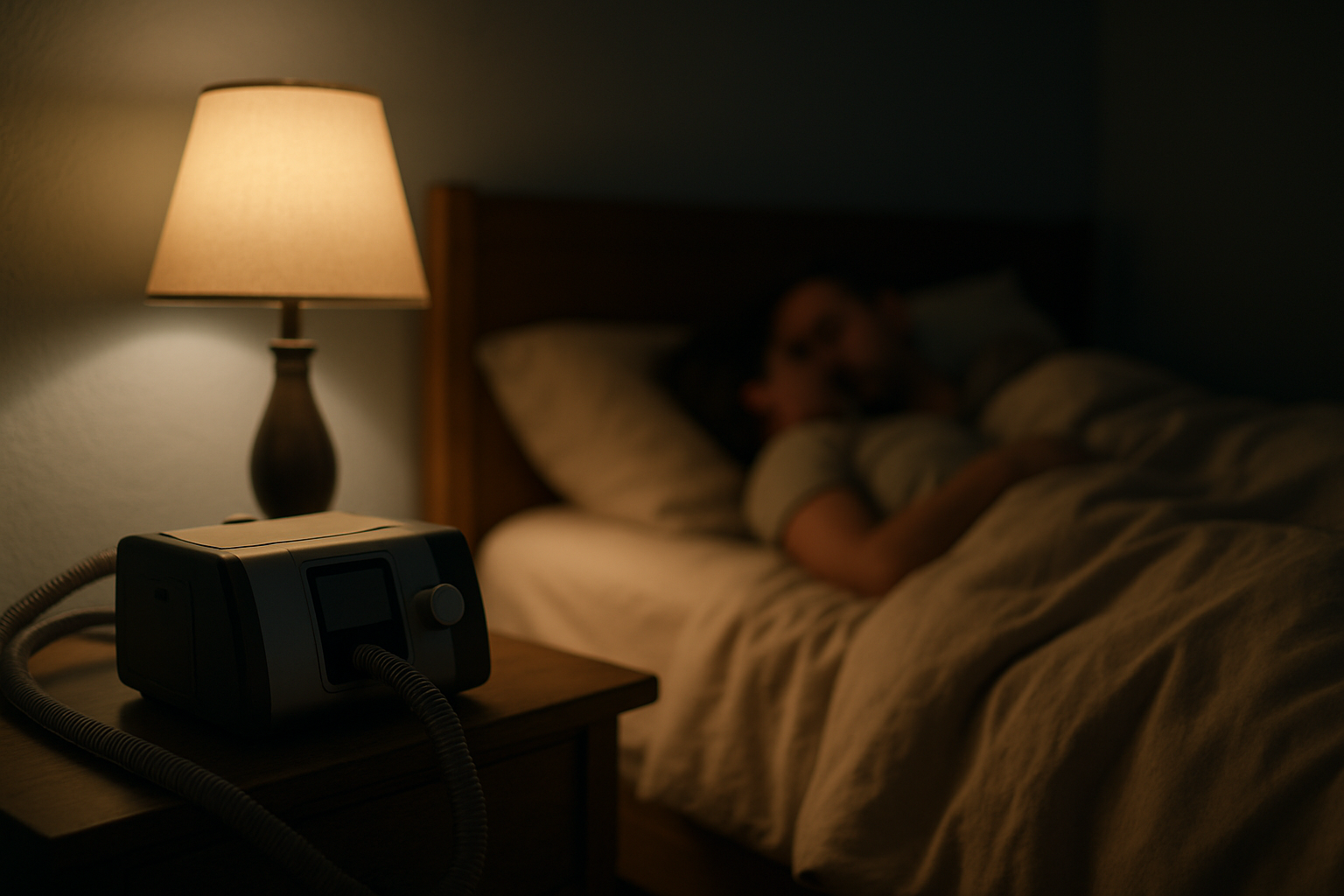
If these lifestyle changes do not help, it may be time to try CPAP therapy. CPAP stands for Continuous Positive Airway Pressure. The patient is connected to a CPAP device specifically adjusted for their sleep apnea. This device is designed to stabilize and keep the patient’s airways open during sleep using light pressure.
If CPAP proves ineffective, surgical intervention may be considered. The type of surgery depends on the location of the airway obstruction. At the nose level, a septoplasty and/or turbinate surgery may be considered. If the obstruction is at the throat level, removing the tonsils or altering the uvula could solve the problem. Other surgical procedures are also available.
A Final Word
I truly hope that the woman reads this article before signing the divorce papers. Perhaps she’s only a CPAP device away from a happy marriage?
Popular brands: ResMed · Philips Respironics